

Despite the New Normal, “Greeting card sales are keeping us going” is the feedback I’ve recently been getting from retailers and it’s certainly true for Blue Eyed Sun of late. All things considered, our card sales have continued to be in line with forecasts and more stores have been ordering since they reopened their doors in July. Our international business and white label production has also been picking up.
Cautious Steps
Whilst it is still early days, like many fellow business owners, I have been cautious about bringing back members of the team until we are busy enough to have sufficient work for them. Our order book has picked up with several larger orders due to be delivered in the next three months and more of our team are returning part -time this month. The tricky part is trying to predict who will all be needed or not. It’s a delicate balance between keeping the company profitable and preparing for what may come, whilst taking into account seasonal fluctuations.
Matters are further complicated by one of our team retiring in October and another taking Maternity leave later in the year. With the furlough scheme ending soon decisions will have to be made by businesses across the country regarding redundancies. I’m not sure that the Chancellor’s Job Retention Bonus will be enough for many to keep staff on. If sales have reduced for a business and team members are not required, then £1,000 is not really going to alter the reality of what needs to be done.
Unless something drastically changes (and let’s face it, anything could this year), as the Job Retention Scheme ends, the UK can expect to see a wave of redundancies start soon and peak in the run up to Christmas. Regardless of the size of this wave, this will very likely affect most of our industry’s Christmas sales. I think many of us are aware of this and lots of retailers have been holding back on their ordering as a result. I also suspect there will be more last minute ordering and an increase in ordering little and often as we close in on the key shopping season of the year.
The shifts in consumer behaviour for High Street retailers cannot be ignored. Online ordering has clearly accelerated. The courier companies are a good indicator of this. Hermes, for example, are creating 10,000 new jobs. Supermarkets have also done well on cards sales during Lockdown as consumers had limited options for places to buy cards. There was a correction on multiple sales when independents reopened, so there is a still a lot of love out there for smaller retailers in their communities. The question is how can small businesses best adapt to the new normal?
Adapting
I’ve been speaking about the Digital High Street at events like Spring Fair for a number of years now, encouraging retailers to get online and to use tools like social media and email lists to boost their sales. One of the good things about the pandemic is that it forces us to make changes that we may have previously put off.
Retailers who haven’t adapted yet, still have a short window to get themselves digitally sorted for the all important Christmas shopping season. A good way to get started is to build your email list and social media following at your tills so that you can keep in contact with your customers and encourage them to engage with you both online and offline. I’d also choose simple, low-cost software like Shopify to create an online store that serves your customers’ needs.
To be fair, several of our retailers have been doing this and we regularly get requests for images and product data to help them get started. Selling online feels like a lot of work and in many ways it is. Running an e-commerce website is like setting up another business. The key difference is it can be accessed 24/7 and is not limited to one geographic location.
We get orders from all over the world each week on our consumer website at GreenMagpie.net. The downside is, nobody knows you are online until you start driving traffic to your site. I have written whole blog posts and articles about this and I always recommend starting with your core customer base. You know who they are and can enrol them in spreading the word about your venture online.
The pandemic is forcing many of us to adapt. Blue Eyed Sun is now emailing statements instead of posting them and it’s been just as effective. We’ve also produced our last two brochures in PDF format only instead of printing them. Whilst this has been driven primarily by cost savings, we’ve found that it has enabled us to try new things. For example, our Summer 2020 Everyday Card Brochure now also has a large section organised by occasion. This mirrors our website and allows customers to choose from 24 different Baby Boy cards, for example. A printed brochure like this would be prohibitively expensive so we used to only categorise cards by range. There’s no extra cost to add a few pages digitally though, so now we can do both.
My next project will be to automate my bank reconciliations with my Sage accounting software. I’ll also need to figure out how to sell more to retailers online to replace the new business we usually acquire at trade shows, which will inevitably have a 12-18 month hiatus. After exhibiting at over 100 trade shows we have built a sizeable email list of buyers to keep in touch with.
All of these adaptations have saved money, time and resource. They also enable us to do new things, like share our products with a wider audience. We can get our brochure out to even more people than before and they can share copies more readily with others. I’ve previously been really wary of doing this, because the card industry can assimilate artwork quickly, but this open way of selling is part of the new mode of working. It will no doubt take us to places we have not been before with our previously closed and protective approach of qualifying all prospects first.
The new safety regime is another big change that we are all having to adapt to.
Covering Up
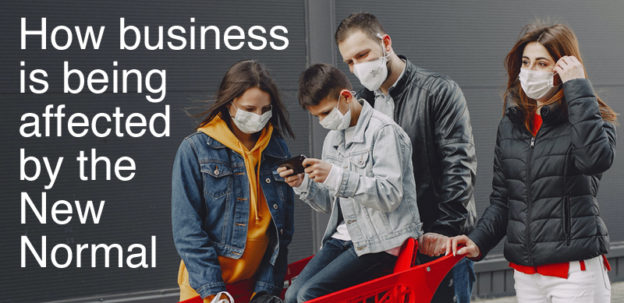
The government recently introduced mandatory face coverings in UK stores. According to our Health Secretary, Matt Hancock, the Covid-19 related death rate of sales and retail assistants is 75% higher amongst men and 60% higher amongst women than in the general population. Retailers have gone to great lengths to reopen the stores in as safely as possible. How keen consumers will be to visit them clad in personal protective gear remains to be seen.
Personally, I am not excited about this aspect of the ‘new normal.’ On a recent visit to my hairdresser, I disliked having my temperature checked and my address details taken down. Nor did I enjoy being clad in plastic and a face mask as I sat between two vertical sheets of plastic. My hairdresser was similarly donned in plastic and wore a visor.
Aside from the huge amount of plastic waste (which is already causing more environmental issues) I miss the little things about the human interaction we usually have. The smiles, the laughter and the relaxed nature of hair cutting were all stilted by the PPE. It’s just not relaxing attire. It reeks of fear. I’ve decided to wear my hair long this year to minimise these unpleasant experience.
To my mind, the masks are likely to perpetuate this feeling. On the other hand, their use will reassure other shoppers when out and about. More importantly, they may limit the spread of Covid-19. Time will tell I guess.
Changing Times
With no more shows scheduled for this year and a load of stock to shift before Christmas, many of us will have similar challenges adapting to the new normal. We’ll also all have to have more hand sanitiser, social distancing and even PPE in our businesses. Even the layout of our workplaces will change.
On the plus side, we will discover new ways of working. New systems that are safer, more efficient and cost less. It’s the nature of this time for us to adapt. New businesses and opportunities will emerge and the new normal will create a new wave of creativity, compassion and ingenuity for us to look forward to.
Hear Jeremy talk more about the new normal on this podcast