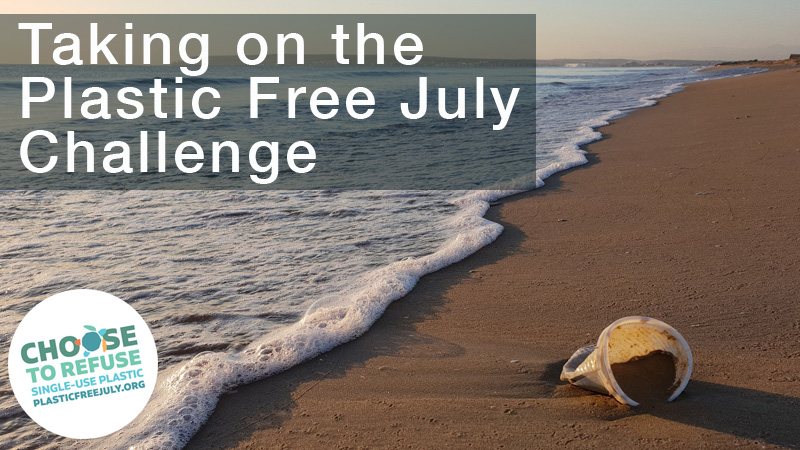
 As part of the #PowerOfOne campaign at Spring Fair this year I committed to taking part in Plastic Free July this year. Since I covered the spread of this grass roots movement for change in my talk on the main stage on the ‘Rise of the Ethical Consumer and the Growth in the Green Economy’ and have been curious to try it.
What a Waste
For those of you that aren’t already aware, retail manufacturing (and by implication… retail itself) is the second most polluting industry on the planet. The first being oil (the base product for plastic). The Story of Stuff website has calculated the for every rubbish bin of stuff we throw out, up to seventy equivalent sized bins of waste have been used to produce the stuff that ultimately wound up in that bin. Worse still, 99% of the total material flow feeding our consumer habits is trashed within 6 months. This aside from all of the toxic chemicals used to produce the goods and the toxins released in their destruction at end of life.
Waste is one thing, but single-use plastic waste is a particularly problematic issue as it takes so long for plastic to break down. Hundreds of years in most cases. In fact, it doesn’t really ever properly break down, it just ends up as smaller pieces of micro-plastic, which when ingested by living creatures like us or those that we eat can lead to a range of health issues which stretch from cancer to genital deformities.
The majority of us have seen the terrible images of huge amounts of plastic in the ocean. Sea creatures strangled or disabled by plastic on Blue Planet II has had a huge impact on our behaviour, with the majority of us taking action to reduce the plastic waste we put out into the world.
Change is Happening
If you are not convinced this is happening yet, take a look at a few indicators:
First there’s the 90% reduction in consumption of single-use plastic bags at supermarket and recent changes in government legislation on straws, cotton buds and stirrers; with more laws inevitably still to come on coffee cups and ultimately plastic bottles. Humans currently waste 100 billion single-use plastic lined coffee cups and 500 billion plastic bottles every year with over 90% not being recycled.
Secondly, there’s the steep rise in numbers taking part in Veganuary each year, when people choose to go vegan for the month of January. 40% of plastic in the oceans comes from fishing nets and lines, which as you can imagine causes all sorts of horrors for the sea-life that get tangled up in them and die. The documentary Cowspiracy calculates that for every pound of fish caught, upon to 5 pounds of unintended marine species are caught and discarded as by-kill. If you eat fish caught in the wild then you are part of this story I’m afraid. If you don’t there are a host of other health issues with farmed fish, but that’s a discussion for another time.
Another indicator for me is the growth in numbers of people taking up the Plastic Free July challenge. Now in its eighth year and boasting take up of millions of people in over 192 countries around the world.
What is Plastic Free July?
The movement started in 2011 by a small group of Australians who were horrified at the impact humans were having on the oceans surrounding them. The goal of the campaign is to cut single-use plastic waste and to encourage recycling infrastructure. People make their pledge on the website at www.plasticfreejuly.org to reduce their plastic consumption in July.
How to Join In
There are three main ways of getting involved in Plastic Free July. For the entire month you can commit to:
- Avoid single-use plastic packaging
- Target takeaway items (the Top 4: bags, bottles, straws and coffee cups)
- Go completely plastic free
You are able to use reusable products made from plastic. Technically, eating out at restaurants is is not covered.
The Challenges
For those of you who read my column, you’ll know that I do enjoy taking on new challenges, whether it’s running marathons or learning to ride a motorbike and riding across the Gobi desert.
I have to be honest, I’m slightly concerned about this one. Using a reusable bag, bottle and coffee cup is easy and has had a big effect on the number of bags, bottles and cups I used to bin each year.
Despite already making a conscious effort to cut plastic from my life, I still buy certain items each month that are wrapped in single-use plastic.
Food and drink is the area I am most concerned about. There is plastic in so many things, even canned drinks are often lined with plastic inside them to prevent them tasting of metal. Something I only recently discovered and never would have thought of. Most bottle tops are also lined with plastic. Tetra pack juice and milk cartons are all lined with plastic and aluminium.
I don’t tend to buy much processed food, but a lot of what I eat and drink has some single-use plastic. Rice, cucumber, porridge oats, strawberries, raspberries, salad, houmous, rice milk, sandwiches and juice cartons all come bagged in plastic. We eat every day, so tackling this area individually and together will give us our biggest wins.
Next there’s toiletries: Shaving gel, shampoo, shower gel, toothpaste, cotton buds, toilet paper and the majority of bathroom products come in plastic. Fortunately the micro-beads that used to be in them have now been banned. There’s more in the kitchen too: Washing up liquid, washing powder, sponge, cleaning products, cling film and so on… all plastic.
New stores have been opening across the country serving the needs that arrive from ditching plastic where products are bought in bulk and consumers can bring their own cartons to stock up on rice, cereals and so on.
More Plastic Changes
Even some of our clothes are made from plastic. Polyester and Nylon are plastics. When we wash a fleece it can shed top to 250,000 pieces of micro-plastic which goes straight down our drains and into the sea. Glitter in make-up is similarly problematic as is any other micro-plastic being washed down our drains, like parts of washing up sponges for example. Cutting back on these products will also help.
There are also infrastructural changes that need to happen in the UK with regards to recycling and collection of waste. A lot of our waste used to be shipped abroad for other countries to deal with. Recently some of them have even been sending it back to where it came from. We need efficient systems for processing and dealing with our waste. Pushing government on these issues and banning certain products is key for this.
I also run a business that has sold millions of items wrapped in single-use plastic. Perhaps you do too. Each of our businesses support the income of many people and making drastic change within it is not something we take lightly. Something must be done though. I haven’t taken the pledge on my team’s behalf, although I have decided to take action on drastically reducing our plastic usage this year. How this will happen, I have yet to figure out, but it will.
Expectations
I plan to video my experience of taking part in #PlasticFreeJuly and share my experience on the Stories of my Instagram account @JeremyCorner.
What about you? Would you like to change the world? If yes, then take the pledge and give it a go. I’d love to hear from anyone else that is taking part in the challenge so that we can support one another. Even if you don’t do it, I’d love for you to follow my journey so you can see what it’s like.
We only have one life, we only have one planet for ourselves and our children. Our oceans are the foundation for all life on Earth. We’re poisoning our planet with plastic, livestock farming, toxic chemicals and pollution. We must all take action. If not us, then who?
I’ll be speaking on Going Plastic Free: Just how practical is that? on the Inspiring Retail Stage at 13:30 on Sunday 1st September 2019 in Hall 6 at Autumn Fair in the NEC, Birmingham – Hall 6.
The Rise of the Ethical Consumer