This year the Greeting Card Association celebrates its 100th Anniversary, so I thought I’d take a look at the last ten decades of card sending. You can see even more at the GCA AGM this month.
A brief history
The custom of sending cards can be traced back to the ancient Chinese who sent one another New Year greetings. The early Egyptians exchanged goodwill messages on papyrus. Handmade paper Valentine messages were sent in Europe from the early 15th Century.
Henry Cole, a founding director of the V&A in London, sent the first Christmas card in 1843. The reform of the Royal Mail in 1940 made postage more accessible after a charge of one penny (roughly £1 in today’s money) was set for carriage and delivery of cards between any two places in the UK irrespective of distance.
The GCA
As postal services and the custom of greeting card sending grew, it took another 76 years for the emerging industry to officially form its trade body. The Greeting Card Association (GCA) was created just after the first Word War in 1919 to protect and promote card sending.
Here are some examples of cards published in each of the last ten decades since it was formed:
Twenties
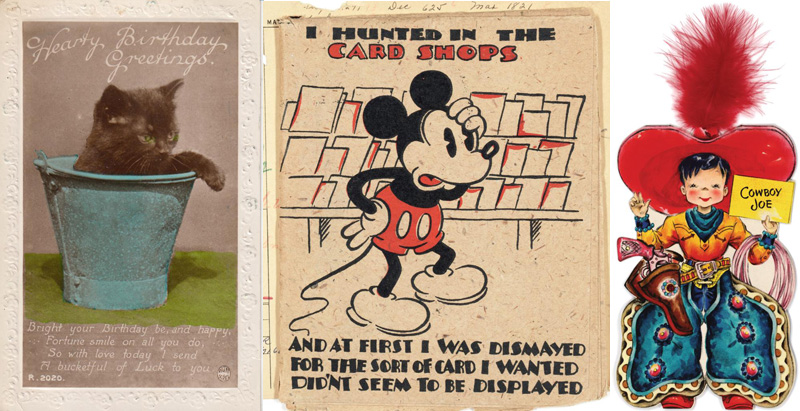
Thanks to Geoff Sanderson, who has helped to create card images dating right back to the first decade of the GCA’s inception. It seems that pre-internet cat selfies still stole the show when it came to cute sentiments. It’s interesting to see the Regent Series branding on the front. The card is embossed around the edges and the colour palette is limited, perhaps due to the printing processes available at the time.
Thirties
Hallmark was Disney’s first licensee and this 1932 Mickey Mouse card shows how quickly the infamous mouse spread across the planet after his creation in 1928. This card also suggested that card shops were becoming a thing. The palette is limited to two colours and it appears that cute and humorous cards crossed over to adults.
Forties
Many of the greeting cards during this period came from America, with American Greetings (est 1906) and Hallmark (est 1910) leading the charge. This cowboy card shows the American style and the evolving colours and techniques like die-cutting. Notice the feather used to create a sense of added value and ‘specialness’.
Fifties
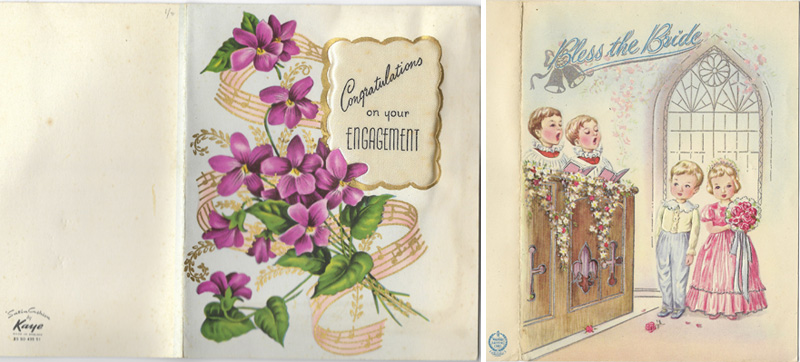
Danielle, one of our team members at Blue Eyed Sun, unearthed a treasure trove of cards dating back to the fifties in her loft, including her mum and dad’s engagement and wedding cards from 1958. Their engagement card from their parents was published by Kaye and has a satin cushion on the front, with verse inside. There’s also a cute wedding day card from Waldorf, which is foiled and embossed.
The cards from the fifties are mostly lighterweight papers folded over (refered to as a French fold) to create the feeling of weight. They have foiling, embossing, die-cuts and ‘wordy’ sentiment inside them. Some have ribbon. Brands include Kaye Gibson, Waldorf, A.M. Davis & Co, Envoy, Diplomat, Forget-Me-Not and Sharpe’s Classic.
Sixties
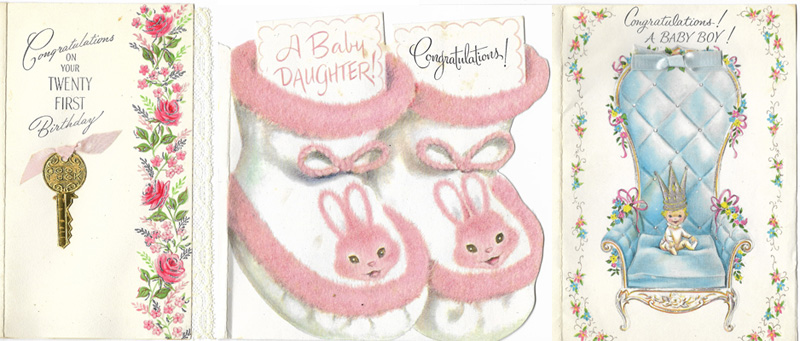
Danny’s sixties cards also used die-stamping, flocking and flittering. They’re still mostly paper folded in half, which allowed four colour imagery to appear on the inside of the card with only one side of the overall sheet being printed on.
Danny’s mum, Pam’s 21st card from her sister Carol, was published by Kaye Gibson. It’s foiled and embossed with lace detailing added to the right hand edge and a die-cut gold key attached to the front with a ribbon.
A card by Rustcraft to Pam on Danny’s birth is die-cut and flocked. There’s a nice baby boy card from Academy on the birth of Danny’s brother, Ricky. In addition to previous brands mentioned there were also cards by Image Arts, Gibson and Delightful.
Seventies
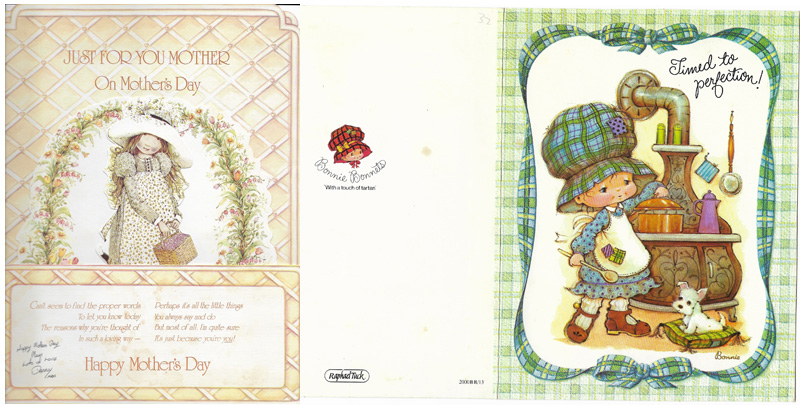
Danny loves cute cards and the birthday cards she chose for her mum feature cartoon hedgehogs, kitten, puppies and cherubs. There’s a nice die-cut, pop-up Mother’s Day card featuring Holly Hobbie from Celebration Arts, plus a cute Bonnie Bonnets card by Raphael Tuck.
The boards are heavier (280gsm plus) and most of the cards are gloss finished, brighter and more colourful than previous decades. Many are larger in size too. Brands from this decade include Creative Cards, Forget Me Not and Sharpe’s Classic.
Eighties
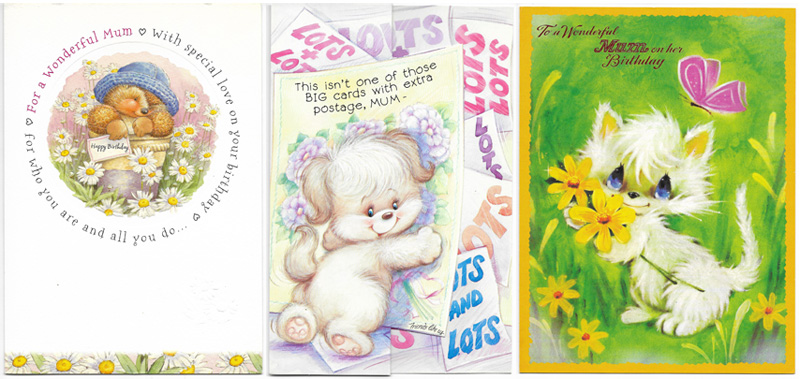
The cards get even cuter in the eighties, like the cute puppy the Friends like Us range published by Carlton under the Forget Me Not brand. There are a couple of cute Country Companions hedgehog designs (first published under Gordon Fraser and then acquired by Hallmark in the late 80s).
Other brands include Lucie Attwell, Heron Arts, Riviera (Carlton Cards), Gibson Greetings and early Andrew Brownsword.

Nineties
It’s impossible to talk about cards in the nineties without mentioning Forever Friends and Andrew Brownsword. This brand served to establish cute as a strong adult category (note that these examples are for Mum and Nanna). The inside of the Mum cards reads: “It’s a hug in an envelope.” The cherub card is from Andrew’s Cherish the Thought Range.
Interestingly, the Brownsword Collection card states on the back that the cards are made from managed forests that are replenished with new trees. The Friends Like Us range mentioned earlier has a similar message. It’s great to see this environmental message on cards is over 30 years old.
For the last two decades I thought I’d talk a little bit about Blue Eyed Sun cards…
Noughties
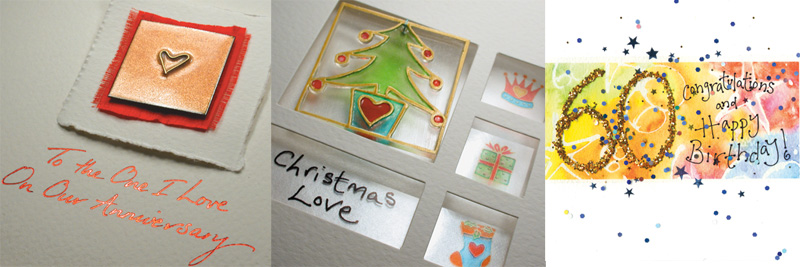
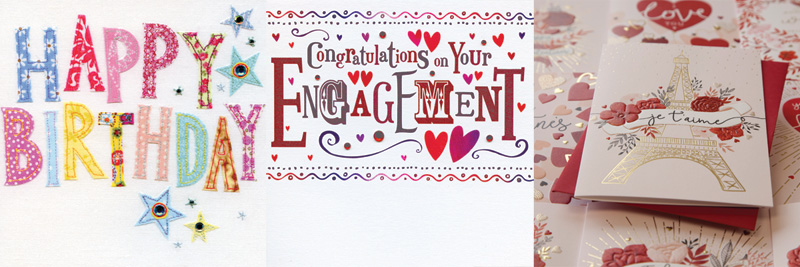
In 2000, Blue Eyed Sun launched its first range of Glass Enamel cards on the market at Top Drawer (the one in May that became Pulse). They were an instant hit as nobody made anything quite like them. Hugely time consuming to hand fire in hot kilns, they were a niche product that got us noticed and garnered our first Henries awards nomination in 2001. One of the original designs even made its way into the V&A archive collection.
In 2003, we added our Suncatchers range, which included pieces of hand-painted resin that you could hang on your Christmas tree or in your window. We won a Gift of the Year award for Best Design-Led Cards that year. A host of other ranges followed, including our hand-glittered Kaleidoscope cards, which still sell internationally. Eventually, we built up enough profit to move away from using generic card blanks onto which we affixed our motifs onto our first litho printed ranges.
Danny joined our team from Woolworths in 2008.
Teens
We’ve launched a large number of different ranges over the years. Not all have been successful, but we’ve always managed to keep pushing until we found what worked. In 2011 we had our first cold foiled range, Jingles, which we licensed onto almost 100 gift products. Our biggest range to date has been Vintage, which caught the huge ‘make do and mend’ trend, and still makes up 25% of our sales. Despite numerous look-a-likes I feel they still are the nicest ‘stitched’ designs around and look like real fabric has been attached to the cards.
The future
Our 2020 vision includes lots of lovely cards by new designers like Jade Mosinski and more exciting licences, as well as a determined focus to cut single-use plastics and be even more environmentally friendly than we currently already are.
It’s amazing seeing our lives mapped out through the cards we send one another. Not just those of the people who buy them and receive them, there’s all of the thousands of people involved in creating, publishing, distributing, retailing and mailing them. Who knows where this wonderful tradition of reaching out to one another will be in another hundred years? Hopefully, people will still delight in pulling out their greeting card memories and enjoying them once more.
Attend the GCA AGM 2019 and hear more about the history of cards